Raking at Ham Woods-(PEA PUPPY SPECIAL)-1st March 2015

Warning!: This Post contains images of varying degrees of 'Cuteness'-Those with a tendency to 'AWWH!!' and "Squeeee!!' loudly in Public upon the slightest signs of cuteness should read this with caution-You have been Warned! 

After the stormy weather of the previous week, the PEA team were blessed with warm, clear skies as we headed to local Plymouth nature spot, Ham woods, for session of slope meadow raking with Friends of Ham Woods.

We also had a very special mascot for the day-so as I get my metaphorical earplugs in place-allow me to introduce, Daisy.

Yes, yes melts your heart doesn't she?

 Though new to PEA, it didn't Daisy long to get settled into the group!

Starting with supervising the usual pre-work tea warmup!

Provided that she also got some refreshment of course!

 And was allowed to invite some friends over!

       This week we were lucky enough to have this 'delicious' Victoria 
sponge to get our blood rushing, kindly provided by Chris's Mum, Mrs Bond!

                                                                   
Compliments to le baker!

  It was so good some people got a bit stingie with their portions-
You're weren't gonna eat all that slice were you Rob?

Fuelled with cake we got to work raking!


At PEA we pride ourselves on teamwork-but that doesn't mean we don't enjoy a bit of friendly competition...
Ahem...I win...

With this sort of work though it really paid to have an extra pair of hands...
So natural Chris-Anyone'd think you were posing!

In order to get the grass cuttings down the hill, we found the 'swiss roll' method to work best!

On another 'cake' related' matter,
 Chris almost performed a serious crime during lunch....
DON'T..YOU...DARE!!

Luckily Esther is able to tame Chris's criminal confectionary urges!
Ain't dat face just precious?

After lunch Daisy joined us from her vantage point of our cosy coats 
at the top of the hill to review our work...

It was that...or she had an itch...


With all the grass raked...we couldn't resist not getting some use out of it...


5.5


6.2


4.5

Chris Needed a bit of encouragement for his 'Non-dive'


0.3

With our work and 'diving' competition over, we packed up our tools and bags.

We'll be back to Ham Woods later in the year to see how our raking efforts have hopefully transformed this slope into a naturally blossoming meadow. 


We then headed back to the bus to say farewell to our Ham Woods friends, and our special canine companion....


Who like us had a nice warm B-A-T-H in store for when we got home....

"DID SOMEONE MENTION THE 'B' WORD?!"


                                                                           Michael Gamble-PEA Team


Rainy and windy Redoubt Restoration at Maker-22nd February 2015

The weather forecast didn't look too good...
But we were DETERMINED to defeat the rain and carry on as normal!

Off we set in the minibus over on the ferry to Cornwall
Passing the daffy-down-dilly and cabbage fields on the way...

First things first: Lemon drizzle cake and a cup of tea while the rain and wind LASHED the minibus. We were fine, we were all cosy inside right?!


Warmed tummys and ready for a snooze, Chris the Project Officer announces we are to alight from the minibus....

WHAT????!!! In that weather?!


Yup! So waterproof cladding began.... 
Head-to-toe waterproofed... or so we thought!


Out came the loppers, slashers, grass hooks, bowsaws....
Round of names and 'what would you be if you were an animal?', followed by the 'tool talk' and we braved the gale!

....Julia Newt, Hayley Lemur, Rob Dog, Pete Polar Bear, Julz Wolf, Sam Stag, Ngaio Cat, Laura Pug, Esther Bird, and Chris Monkey....


In the howling wind and rain, we began a bonfire to burn all the cut vegetation...
Proper forest-school styleee. No we haven't forgotten the techniques Emily! :D


YES! We have FIRE!


Well, a small fire anyway. Before the heavens opened even wider and literally BUCKETS of water fell from the sky...


The Camera got a bit 'moist'...

And so did we!! Before long, we fired up the storm kettle ready for a nice cup and tea and lunch.... in the minibus of course! We didn't want soggy sandwiches as well!!

Overall a good day despite what the weather had in store for us!

See you next week peeps! :D


                                                                              Esther Hughes-PEA Team

Plants in Winter (and a centipede and some mushrooms!)

As promised here is the blog post on the 'Winter plants' talk we had at Maker last Valentine weekend!


Often we can identify a plant or tree from its FLOWERS and LEAVES!

But what are we do in WINTER when most of the flowers (and usually the leaves) have gone?!!

Well, we look at the STEM, the FRUITS/SEEDS (if present), the LEAVES (if present or dried) and the general shape and structures...

Other plants are EVERGREEN and so keep their leaves (and sometimes flowers) all year!

Common or European Gorse
GORSE is an extremely spiny evergreen (you got it! - in leaf all year! - 'ever-green'!) so it's EASY to identify in winter! It even flowers most of the year! :)
One of the world’s 100 worst invasive alien species
Similar to Western Gorse, but is much taller (reaches 2-3m in height compared with Western gorse which is low growing – not much higher than 0.5 m)
Yellow ‘Pea-flower like’ flowers which smell of COCONUT (western gorse smalls of apricot)
Insects, especially bees like the nectar!
Gorse flowers are edible and can be used in salads, tea and to make a ‘wine’.
Traditionally used as fodder for cattle, being made edible by crushing and grinding
Highly flammable! So good for bonfires!


Cow Parsley
Can be identified from its 'Upside-down umbrella-like' structures where the flowers once were.


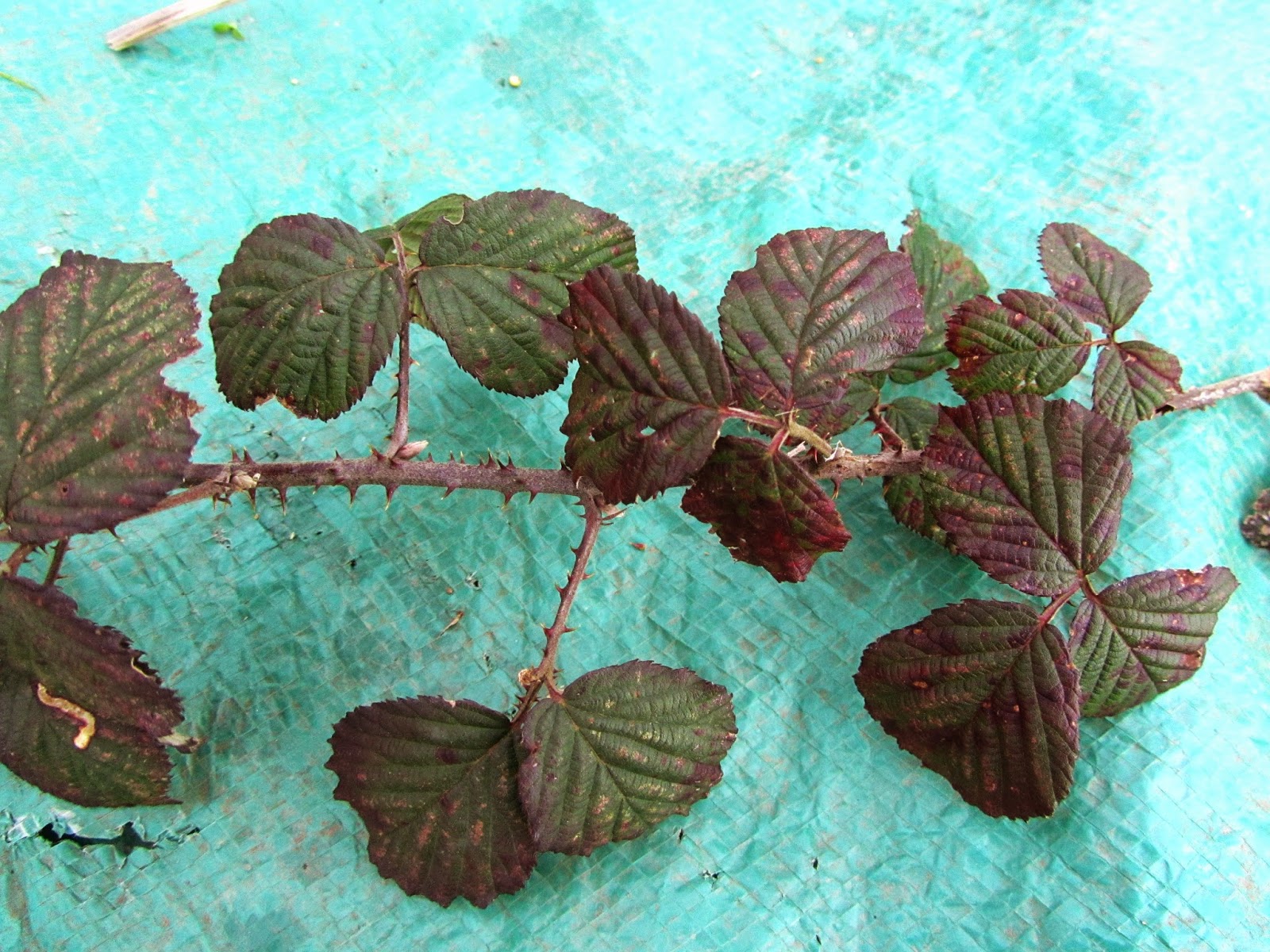
Bramble or Blackberry
Looses most of its leaves, but many often remain which makes this an easy one to identify!
Blackberry fruits in Autumn, and thorns all over the stems all year round! Watch out for this one, it's spikey!


The Bramble or Blackberry flower stalk - what remains once all the blackberries have been eaten!


Hard Fern
Widespread throughout the British Isles, and often the dominant fern in limestone woodlands
Look at this awesome guide to ferns I have found!


Woodland Sage or Sage-leaved Germander
When all the leaves have died down, this is what is left! A very pretty 'spike' of dried flowers, nicely arranged.
You can also make beer from the leaves, apparently! ;)


Red Campion
See more info from The Wildlife Trusts here


Dock
The leaves, when they are around, are good for relieving the sting of a nettle! The reason for this is that the leaves are alkaline, whereas the nettle sting is acidic. So there you have it! Neutralization!
The stems go very 'woody' and are reddish-brown in colour. The flower structures dry on the stem and can be seen persisting all year!


Burdock
Ah, the 'sticky' BURDOCK! You know the cordial your granny drinks with dandelion!
Yes that's the one! An acquired taste.
Don't tell too many people about it's sticking abilities! You'll have loads of them on your back if you do! See those little 'hooks' at the end of the spikes? This plant is the natural VELCRO!


Oh pretty little Naval Pennywort
'Naval' like your tummy-button! Round like a penny!
Tastes a bit like cucumber. A good thirst quencher if you're trying out some survival techniques!


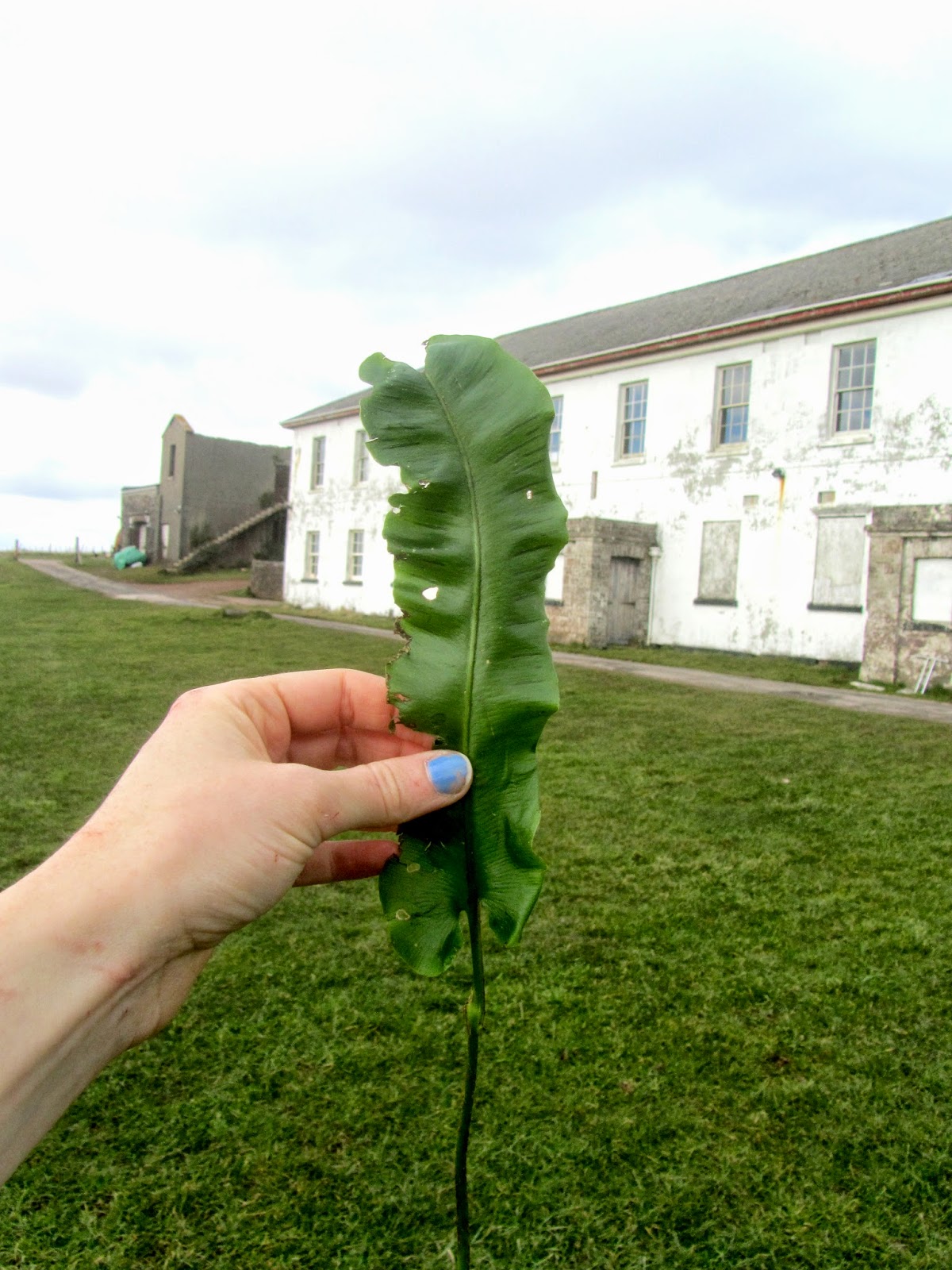
Hart's Tongue
Like a 'harts tongue'! This is a type of fern and stays green all year round.


Lesser Knapweed
The seed head is quite distinctive. If you break open the 'pod' lots of little black seeds are inside. Check out the Gloucestershire page on knapweed to see what it looks like in Summer


Marsh thistle
From the dried plant you can make out the flower head and leaves.
The young stems and seed stalks have traditionally been eaten raw as a salad or (after careful peeling) cooked like asparagus or rhubarb.  The seed-fluff has long been used as tinder - useful to know for our Storm Kettle!


Ok, so we got a bit carried away taking photos of nature! So these aren't flowering plants, but they are just as awesome!
Ear fungus
Well it's all in the name isn't it?!
It's a MUSHROOM.


Lots of 'ears' on a branch


Yellow-brain fungus
Often found attached to gorse. It can be quite camourflaged amongst the yellow flowers!


Hayley found a CENTIPEDE! Look at all those legs!


Some 'unidentified' mushrooms. Gonna have to dig out the Collins mushroom guide!

So there you have it! A selection of winter plants! Please let me know if you want any more info or have any ideas for the next edition....

....Next edition.... 'Spring plants'

Esther Hughes - PEA team